
How Family Offices Are Redefining Sports Partnerships in Asia (2026)
The global sports landscape is undergoing a fundamental structural transformation.
Family offices invest in sports to generate long-term equity returns, diversify portfolios, and gain operational control over high-growth media assets. The global sports landscape is undergoing a fundamental structural transformation. While traditional corporate sponsorships once served as the primary lifeblood of professional sports, a new titan has emerged in the capital stack: the family office. In 2026, the influx of private wealth into sports is no longer a peripheral trend; it is a strategic takeover of how value is created, managed, and scaled in the industry.
From Singapore to London, ultra-high-net-worth (UHNW) families are bypassing the limitations of standard marketing contracts in favour of direct equity, infrastructure development, and multi-club ownership models. For sports entities in Asia and Southeast Asia, this represents a golden era of liquidity. For family offices, it is an opportunity to institutionalise passion into a high-performance asset class.
This article explores why family offices are the future of investment in sports partnerships. Get access to active family offices investing in sports.
What Is a Family Office?
A family office is a private wealth management advisory firm that serves ultra-high-net-worth individuals and families. Unlike traditional investment firms, family offices manage nearly every aspect of a family’s financial life, including tax planning, estate management, and direct investments.
Key Characteristics:
- Total Autonomy: They are not restricted by the mandates of institutional funds.
- Generational Horizon: Investments are often made with a 20 to 50-year perspective.
- Discretion: Transactions are often private, enabling nimble movement in sensitive markets.
Why Family Offices Invest in Sports?
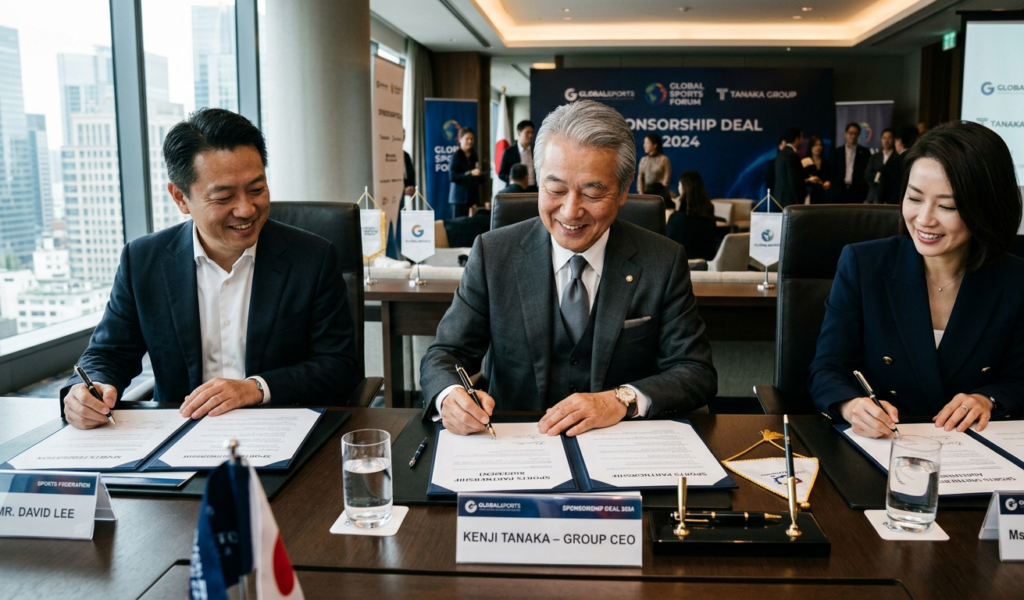
For decades, the relationship between capital and sports was transactional. A brand paid a fee, placed a logo on a jersey, and hoped for a lift in brand equity. However, the rise of the “Family Office 2.0” has shifted the focus from visibility to value-add.
Unlike public corporations, which are often beholden to quarterly earnings and rigid marketing budgets, family offices operate on generational timelines. They are not looking for a one-year “patch” on a shirt; they are looking for a ten-year stake in a rights-bearing IP engine. As professional sport in Asia enters a “new phase of investability,” the focus has moved toward underwriting teams as durable media and entertainment platforms rather than mere local franchises.
Case Study: Indian E-Commerce Brand × European Football League Partnership
A Mumbai-based fashion retailer partnered with a mid-tier European football club through a sports marketing agency’s facilitation. Traditional agency analysis suggested ₹450 million in “media value” from jersey placement and social media exposure.
Our performance calculation:
- Media Value: ₹450M (theoretical)
- Conversion Revenue: ₹890M (directly tracked through geo-targeted landing pages, exclusive product codes, influencer activations coordinated with match schedules)
- Sponsorship Cost: ₹520M (rights + activation + agency fees)
- Traditional ROI: -13.5% (loss)
- Performance ROI: +157% (spectacular win)
The partnership “failed” by Western metrics (media value didn’t cover costs) but succeeded wildly by Asian e-commerce metrics (driving ₹370M in net profit). Western agencies would have killed this deal. SportsBridge Asia structured it for conversion, not vanity metrics.
This is the fundamental difference: we understand that for most Asian brands, sports partnerships are performance marketing channels, not brand awareness exercises. Sportsbridge Asia’s entire framework, from right-holder selection to activation strategies, is optimised for measurable revenue, not theoretical media value.
How do family offices invest in sports teams?
The transition from a traditional model to a partnership model is best understood as a move from Expense to Asset.
| Feature | Traditional Sponsorship Model | Family Office Partnership Model |
|---|---|---|
| Primary Objective | Brand awareness and logo visibility | Equity growth and operational influence |
| Capital Type | Marketing budget (OPEX) | Investment capital (CAPEX) |
| Duration | 1–3 years (Renewable) | Indefinite / Generational |
| Involvement | Passive (Watching from the box) | Active (Board seats, strategic guidance) |
| Revenue Focus | Direct ROI from sales | Enterprise Value (EV) appreciation |
The surge of investment in sports partnerships, particularly across Southeast Asia and Singapore, is driven by several macroeconomic and cultural catalysts:
1. The Great Wealth Transfer in Asia
It is estimated that USD 5.8 trillion in wealth will be transferred across the Asia-Pacific region by 2030. The “Next-Gen” heirs taking control of these family offices are more likely to prioritise sports, media, and technology over traditional real estate or manufacturing.
2. Scarcity of Premium Assets
Professional sports teams are finite. As major US and European leagues reach valuation saturation, family offices are looking toward emerging Asian IP, such as the J.League, ONE Championship, and Indian Premier League (IPL) franchises, where the “monetisation delta” remains high.
3. Sports as an Inflation Hedge
In a volatile global economy, sports rights have proven to be “recession-resilient.” Media rights contracts and captive fan bases provide predictable cash flows that act as a hedge against currency fluctuations and inflation in public markets.
4. Direct Ownership Incentives
Singapore has significantly professionalised its family office ecosystem, with the number of single-family offices (SFOs) increasing by 400% since 2020 (Dakota Data, 2024). This concentrated pool of capital is looking for “lifestyle assets” that also function as institutional-grade investments.
We help sports brands unlock private capital opportunities. Get a curated list of 50+ family offices actively investing in sports across Asia.
Key Advantages of Family Offices in Sports Partnerships
Family offices bring more than just a chequebook; they bring a unique set of structural advantages that traditional sponsors cannot match.
- Agility in Decision-Making: Without the bureaucracy of a multinational board, a family office can close an investment in a fraction of the time required by a corporate sponsor.
- Strategic Adjacencies: Many family offices own businesses in retail, real estate, or hospitality. A family office investing in a football club in Southeast Asia might also own the land surrounding the stadium, creating a holistic ecosystem for “matchday plus” revenue.
- Patient Capital: Sports teams often require significant upfront investment in academies and infrastructure before seeing a return. Family offices are uniquely positioned to provide this “patient capital” without the pressure to exit immediately.
Family Offices vs Traditional Sponsors
While corporate sponsors still play a role, their influence is waning in the face of family office capital.
- Risk Tolerance: Corporate sponsors are risk-averse; they flee at the first sign of controversy. Family offices, often led by entrepreneurs, are more comfortable navigating the “market dislocations” and “dispersion” inherent in professional sports (Goldman Sachs, 2025).
- Operational Control: A traditional sponsor is a guest. A family office partner is an architect. They provide the “data plumbing” for standardised digital inventory and outcome-based pricing, modernising the club’s commercial department.
What This Means for Sports Teams, Athletes, and Agencies
The entry of family offices is rewriting the playbook for every stakeholder in the industry.
New Revenue Models
We are moving away from monolithic broadcast contracts toward layered revenue stacks. This includes linear rights, digital highlights, creator-led content, and localised feeds. Family offices often provide the venture capital needed to build these internal media houses.
Strategic Partnerships vs Logo Placements
The “logo on the kit” is becoming a secondary benefit. The primary partnership now focuses on co-building brands. For example, a family office in Singapore might partner with a European league to launch a localised talent academy, using their regional influence to navigate local regulatory and commercial hurdles.
Opportunity for Co-Building Brands
Athletes are no longer just “endorsers”; they are becoming co-investors alongside family offices. This alignment of interests ensures that the athlete’s personal brand and the family’s capital work toward a singular exit event or long-term valuation target.
Challenges & Risks to Consider
Despite the optimism, family office partnerships are not without complexity.
1. Illiquidity
Sports investments are famously illiquid. Unlike public stocks, you cannot exit a minority stake in a cricket franchise overnight. Family offices must be prepared for long-term capital lockups.
2. Governance Complexity
A common pitfall is “governance drift,” where founder intuition overrides formal investment processes (BNY, 2026). Without a clear decision-rights matrix, the partnership between the sports team and the family office can become dysfunctional.
3. Alignment Issues
Conflict arises when the family’s “passion” for the sport interferes with the team’s professional management. Strategic alignment must be documented and enforced by a neutral third party, such as a specialist marketing and sponsorship agency.
FAQs
Why are family offices choosing sports over traditional asset classes in 2026?
Family offices are increasingly viewing sports as a “non-correlated” asset class. Unlike public equities or bonds, the valuation of a sports franchise is driven by media rights, scarcity, and passionate fan bases, which often remain resilient during economic downturns. Additionally, the move toward direct equity allows families to have more control and operational influence than they would in a standard corporate sponsorship.
How do sports partnerships in Asia differ from those in the US or Europe?
The Asian market, particularly Southeast Asia and Singapore, is currently in a high-growth phase with a focus on “digitally-native” fan engagement. While Western markets are mature and saturated, Asia offers more opportunities for family offices to build new revenue models from the ground up, such as integrating sports with regional e-commerce, real estate developments, and localised media platforms.
What is the difference between a sports sponsorship and a strategic partnership?
A sponsorship is typically a transactional agreement in which a brand pays for visibility (e.g., logo placement). A strategic partnership, often led by family offices, involves long-term capital investment, shared governance, and a focus on increasing the sports entity’s overall enterprise value. It is a move from a marketing expense to a balance sheet investment.
Can family offices invest in individual athletes or only teams?
Family offices are increasingly investing in “Athlete Inc.” models. This involves partnering with elite athletes to build brand ecosystems, venture capital funds, or philanthropic foundations. By aligning with an athlete’s long-term career trajectory, family offices can capture value across multiple industries, including fashion, tech, and wellness.
What are the main risks for a family office entering the sports industry?
The primary risks include illiquidity, as sports assets are not easily traded, and governance challenges. Without a clear strategic roadmap, the “passion” element of sports can lead to emotional rather than data-driven decision-making. Working with a specialist agency like Sportsbridge Asia helps mitigate these risks by providing structured audit and management frameworks.
How does Sportsbridge Asia help family offices navigate these partnerships?
Sportsbridge Asia acts as a strategic bridge between private capital and rights holders. We provide market-specific research, identify undervalued partnership opportunities in Asia and Africa, and manage the commercial execution to ensure that the investment delivers both cultural impact and financial returns.
Conclusion
The future of sports partnerships is private, strategic, and deeply rooted in the family office ecosystem. As the Asian sports market matures, the transition from transactional sponsorship to equity-based investment is inevitable. For ambitious brands and right holders, the challenge is no longer just finding a sponsor but finding the right partner who understands the nuances of the regional market and the complexities of generational wealth.
At Sportsbridge Asia, we sit at the heart of this transition. We do not just facilitate introductions; we architect the structures that allow family offices and sports entities to thrive together. The era of the passive sponsor is over. The era of the strategic family partner has begun.
Looking to connect with family offices for sports investments?