
The 2026 Playbook for Modern Arenas: Decoding the Factors That Influence Public and Private Sport Partnerships
With synthesis from the latest research from global journals, we aim to break down the factors that influence public and private sport partnerships.
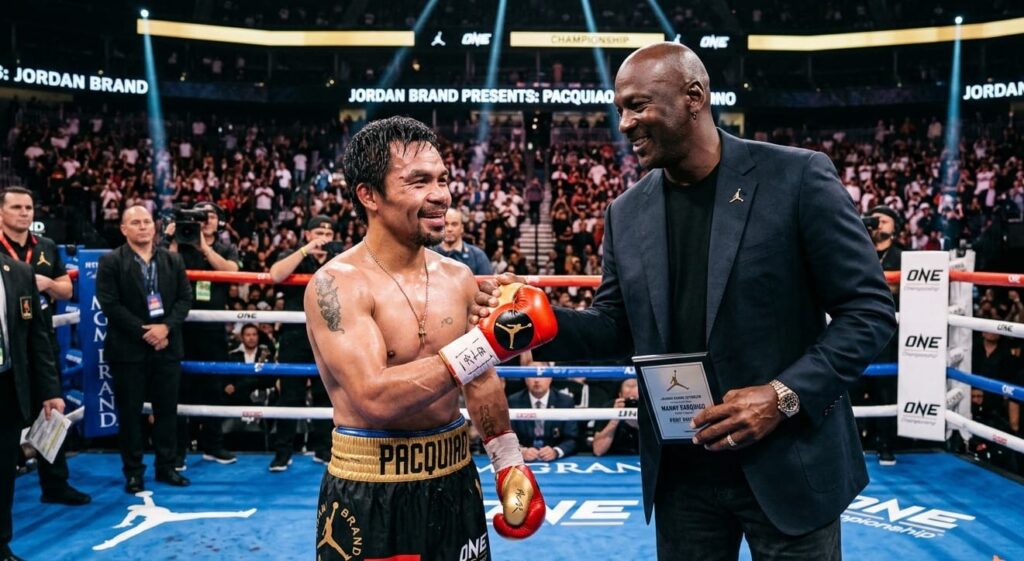
If you’ve spent even a week in sports marketing, you know the word “sponsorship” is fading. In its place is a richer, more complex concept: partnership. The industry has shifted from simple logo spots to Public-Private Partnerships (PPPs) that build stadiums, revive cities, and create Olympic champions.
However, there is a problem. The data explaining how these deals work is usually buried in dense academic journals or technical reports. To the average brand manager or local government official, it can feel like trying to read a play-book in a language they do not speak.
With synthesis from the latest research from global journals, we aim to break down the factors that influence public and private sport partnerships. We will explore why some projects cross the finish line while others stall, and how you can use different sponsorship models to create lasting impact.
Defining the New Era of Sports Partnerships
Before we dive into the factors, we must understand what we are looking at. A public-private sports partnership is not just a government agency giving a tax break to a football club. It is a long-term contractual agreement between a public body (such as a city council) and a private entity (such as a sports brand or an investment group).
The goal is to share both the risks and the rewards of a sports-related project. This could be anything from building a new aquatic centre to launching a national athlete development programme.
Navigating the intersection of public interest and private profit requires more than just a contact list; it requires a bridge between cultures and sectors. At Sportsbridge Asia (SBA), we transform these complex variables into actionable growth.
1. Data-Driven Sports Partnership Strategy
We don’t believe in “logo-slapping.” We use the latest industry data to identify the “Sweet Spot” where a brand’s commercial goals align with a city’s social KPIs. Our strategies ensure that your entry into a market is welcomed by the community and supported by the government.
2. Expert Sponsorship Consulting
From negotiating Build-Operate-Transfer (BOT) models to crafting community-centric programs, our consultancy provides the technical “translation” needed to close deals. We help brands speak the language of “Social Return on Investment” (SROI) while protecting their bottom line.
3. The future of sports isn’t just in the West. SBA offers a unique vantage point by bridging the Asia and Africa corridor.
In Asia: We tap into the “National Identity” model, helping brands align with the massive sports infrastructure boom in markets like India.
In Africa: We focus on grassroots development and talent pipelines, offering brands a “first-mover” advantage in some of the world’s most passionate, emerging sporting nations.
Ready to architect your next move? to bridge the gap between your brand and the next great sporting arena.
The Shift from Philanthropy to Strategy
In the early days, many “partnerships” were little more than philanthropic gestures. A local business would write a cheque for a youth team because the CEO liked football. There was very little focus on Return on Investment (ROI) or community outcomes.
Today, the landscape is different. As global economic pressures mount, the “Public” side of the equation has less capital to spare. Research into European sports financing shows that financial crises often force governments to look toward private capital to maintain infrastructure. This is where the private sector steps in, not just as a donor, but as a strategic partner.
When we look at the research from ResearchGate regarding the impact of the financial crisis on European sport, we see a clear trend. Public funding became tighter, leading to a 15% to 20% drop in direct grants in some regions. This created a vacuum that only private partnerships could fill. However, this transition requires a deep understanding of the factors that influence public and private sport partnerships to ensure that the public interest is protected while the private sector sees a viable business case.
Why the Shift is Happening. Previously, public funds covered most grassroots sports. Now, due to global economic pressures, governments often turn to private capital for infrastructure. The private sector takes on a strategic role in this new environment.
The Core Factors That Influence Public and Private Sport Partnerships
Through an analysis of current project success rates and academic data, we can categorise the influences into four primary buckets: Institutional Support, Financial Viability, Strategic Location, and Shared Governance.
A. Institutional Support and Government Commitment
Research from ScienceDirect on Critical Success Factors (CSFs) highlights that the number one factor for a successful partnership is strong government support.
Public projects often involve a lot of red tape. If the local government is not fully committed, the private partner will face delays that eat into their return on investment.
- Political Stability: Changes in local leadership can kill a partnership overnight.
- Legal Frameworks: There must be clear laws that protect the private investor. If the rules of the game change halfway through the “match,” the partnership will fail.
- Streamlined Bureaucracy: Partnerships thrive when there is a single point of contact within the government rather than ten different departments that do not communicate.
B. Financial Viability and Risk Sharing
You cannot talk about sports partnerships without talking about the money. Data from European financing studies suggests that the most successful models are those where the risk is not lopsided.
If the private sector takes on 100% of the financial risk but the public sector keeps 100% of the control, the model is broken.
- Revenue Streams: Does the project have a clear way to make money? This might be through ticket sales, naming rights, or community membership fees.
- The “Crisis” Factor: Research shows that in times of economic downturn, private partners often become more cautious. A robust partnership includes “break clauses” or “buffer zones” to protect both parties if the economy dips by more than 5% or 10% in a fiscal year.
C. Infrastructure, Location, and Urban Integration
This is a factor that many sports marketers overlook, but it is vital for long-term success. We can actually learn a lot from urban logistics research here. Just as a city logistics hub needs “Transport Accessibility” to survive, a sports facility needs to be integrated into the city fabric.
- Accessibility: If a stadium is built in a location that people cannot reach via public transport, its commercial value drops.
- Environmental Impact: Modern sports partnerships are now heavily influenced by sustainability. Private partners want to be associated with “green” projects. If a facility uses 30% less energy than a traditional build, it becomes a much more attractive sponsorship opportunity.
- Multi-Use Potential: A facility that is only used 20 days a year for matches is a financial drain. The most successful partnerships focus on “locational factors” that allow for 365 days of activity, including retail, co-working spaces, and community events.
D. Strategic Alignment and Common Goals
The final major factor is the “Human Factor.” Are the two parties actually playing the same sport?
- The Public Goal: Usually focused on community health, national pride, or medal counts (as seen in the Indian sports model).
- The Private Goal: Usually focused on brand equity, customer acquisition, or profit.
- The Sweet Spot: The partnership only works if both parties agree that the community’s health is the brand’s success.
Deep Dive into Modern Sponsorship Models
In our agency experience, we see three primary sponsorship models that dominate the public-private landscape today. Choosing the right one depends on your specific goals.
The “Build-Operate-Transfer” (BOT) Model
In this model, a private company builds a facility (like a high-performance training centre), operates it for a set period (usually 15 to 25 years) to recoup its investment, and then hands the ownership back to the public.
- Best for: Large-scale infrastructure projects.
- Success Factor: Clear project definition from day one.
The “Community-Centric” Sponsorship Model
This model is less about bricks and mortar and more about programming. A private brand might partner with a city to fund “Midnight Basketball” programmes or free yoga in public parks.
- Best for: Consumer brands wanting to build local trust.
- Success Factor: Authentic engagement. If it feels like a “corporate takeover” of a public space, the community will push back.
The “National Identity” Model
We see this often in emerging sports markets like India. The partnership is designed to improve the country’s standing on the global stage. Private companies “adopt” certain sports or athletes, providing the funding that the government cannot.
- Best for: High visibility, high-stakes sport development.
- Success Factor: Linking brand success directly to national pride and medal counts.
The Joint Venture (JV) Model
Both the public and private sectors contribute capital and share the management responsibilities. This is common in professional sports leagues where a city helps build a stadium for a team.
- Pros: Shared expertise and shared risk.
- Cons: Decisions can be slow because two different “bosses” must agree.
- Key Factor: A strong governance board with an independent chairperson.
The “National Identity” and High Performance Model
This is a model we see increasingly in countries like India, as highlighted in the IDEAS/RePEc research. The goal is not just a building, but a result: specifically, Olympic medals or international prestige.
- Pros: High visibility and massive national pride.
- Cons: High pressure. If the athletes do not win, the private sponsor might feel the investment was wasted.
- Key Factor: Long-term commitment. You cannot build an Olympic champion in a single four-year cycle.
Learning from the Research: The Global Perspective
To truly understand the factors that influence public and private sport partnerships, we must look at how different regions approach the problem.
The European Experience: Resilience through Crisis
The research from ResearchGate on European sports financing provides a fascinating look at how the 2008 financial crisis changed the game. Before the crisis, many European clubs relied on generous local government subsidies. When those subsidies dried up, clubs had to pivot to private sponsorship models that were much more demanding.
The takeaway for us today is that “Financial Resilience” is a factor in itself. A partnership must be able to withstand a 10% inflation spike or a sudden drop in consumer spending.
The Indian Experience: From Grassroots to Gold
The paper from IDEAS/RePEc regarding India’s medal count and the sports sector model is a masterclass in strategic growth. India has moved toward a model where the private sector does not just sponsor a team; they sponsor an entire ecosystem.
By creating partnerships that focus on talent identification at the grassroots level, they are ensuring a pipeline of success. This shows that “Future Pipeline” is a critical factor for any brand looking for long-term association. They are not just buying a logo on a shirt; they are buying the story of a nation rising.
The Infrastructure Lesson: Logistics as a Blueprint
While the MDPI source focuses on “Small-Scale Logistic City Terminals,” the parallels to sports are striking. They identify four clusters of factors: Environmental, Social, Economic, and Technical.
In the sports world, we can apply this directly. If you are building a community sports hub, you must ask:
- Environmental: Does it reduce the carbon footprint of the city?
- Social: Does it improve the quality of life for the residents?
- Economic: Is it a “Cost-Effective” solution for the taxpayer?
- Technical: Is the facility equipped with the latest technology for data tracking and fan engagement?
The Role of Technology in Modern Partnerships
We cannot ignore the role of digital transformation. In 2025 and 2026, a sports partnership is as much about bits and bytes as it is about bricks and mortar.
Data as the New Currency
The public sector has access to demographic data that is incredibly valuable to brands. Conversely, private brands have data-tracking tools that can help the government understand how citizens are using public facilities.
A successful partnership will include a “Data Sharing Agreement” that allows both sides to optimise their operations. For example, if data shows that the facility is 90% empty on Tuesday mornings, the partnership can launch a “Senior Fitness” programme to fill that gap.
Smart Facilities and the IoT
Using the “Technical Cluster” factors from the logistics research, we can see that “Smart” infrastructure is no longer optional. This includes:
- Sensors that monitor pitch health to reduce water usage by 20%.
- Smart lighting that only turns on when a court is in use.
- High-speed Wi-Fi that allows for “Second Screen” fan experiences
Why Many Partnerships Fail: The Gaps in the Data
If we look at the research provided by Taylor & Francis and ResearchGate, a common theme emerges: The Transparency Gap. Many partnerships fail because they are “opaque.” The public side does not understand the private side’s need for a 15% margin, and the private side does not understand why the public side needs 50% of the facility time to be free for school children.
To outperform the competition, your partnership proposal must address these gaps:
- Data-Driven Reporting: Use real-time analytics to show the social return on investment (SROI). If you can prove that your partnership reduced local childhood obesity by 2%, that is more valuable than 1,000,000 impressions on social media.
- Clear Communication Channels: Do not rely on emails. Set up a joint board with representatives from both sectors to meet monthly.
- Flexibility: The sports world moves fast. A contract written in 2024 must be able to adapt to the technological changes of 2026.
Other than these, there are other factors that affect your sports partnerships.
The “Short-Termism” Trap – Many private brands think in fiscal quarters. Governments think in election cycles (usually 4 years). Sports development takes 10 to 15 years. When there is a mismatch in timing, the partnership feels rushed, and the results are mediocre.
The Communication Breakdown, that’s when the private partner is talking about “Customer Acquisition Cost” while the public partner is talking about “Social Inclusion Metrics,” they are speaking different languages. This is why a “Translator” is needed. You must find the common ground where a social metric becomes a brand asset.
The Lack of Flexibility – Contracts that are too rigid often break. If the contract does not allow for changes in technology (like the rise of E-sports or VR fan experiences), it will be obsolete within 36 months.
6. How to Build a High-Conversion Partnership Proposal
If you are a sports marketer or a public official looking to initiate a partnership, you need a framework. Here is how I would structure a proposal that addresses all the factors that influence public and private sport partnerships.
Actionable Framework: Your 5-Step Checklist for Success
Based on the factors that influence public and private sport partnerships, here is a checklist for your next project.
Step 1: Conduct a “Location and Logistics” Audit
Before you pitch a partnership, look at the physical space. Is it accessible? Does it have the digital infrastructure to support a modern fan experience? Use the 0.352 weight factor logic: if accessibility is low, your sponsorship value is also low.
Step 2: Define the “Shared Win”
Write down one goal for the public sector (e.g., “Increase park usage by 20%”) and one for the private sector (e.g., “Capture 5,000 new email leads”). If these two goals do not support each other, go back to the drawing board.
Step 3: Formalise Risk Sharing
Do not leave the “What Ifs” to chance. Create a document that outlines who pays if the project goes over budget or if a global event (like a pandemic) pauses operations.
Step 4: Choose the Right Sponsorship Model
Do not just ask for money. Ask for a “Sponsorship Model” that fits. Are you looking for a long-term BOT partner or a short-term programme sponsor?
Step 5: Build a “Helpful Content” Bridge
Once the partnership is signed, tell the story. Use infographics to show the community how private funding is helping them. Turn the dense contractual data into a visual “Success Map” that everyone can understand.
The Future of Sports Partnerships (2026 and Beyond)
As we look toward the future, the factors that influence public and private sport partnerships are becoming even more digital and data-heavy. We are seeing the rise of “Smart Stadiums” where the partnership includes a tech giant providing the 5G infrastructure in exchange for data insights.
Furthermore, the “Indian Model” of sports growth shows us that private investment in coaching is key.
and grassroots talent is just as important as building stadiums. In the next five years, the most successful sports partnerships will be those that invest in people, not just property.
Final Thoughts from the Agency Desk
The most successful partnerships are built on trust and translation. You must be able to take the complex needs of a city and translate them into the commercial language of a brand.
If you can master the factors that influence public and private sport partnerships, you are not just a marketer. You are an architect of community growth.
Do not just look for a sponsor. Look for a partner who is willing to share the risk, the work, and the glory.